Copyright © 2026 ArtivaTile by GBMF, LLC - All rights reserved.

Copyright © 2026 ArtivaTile by GBMF, LLC - All rights reserved.

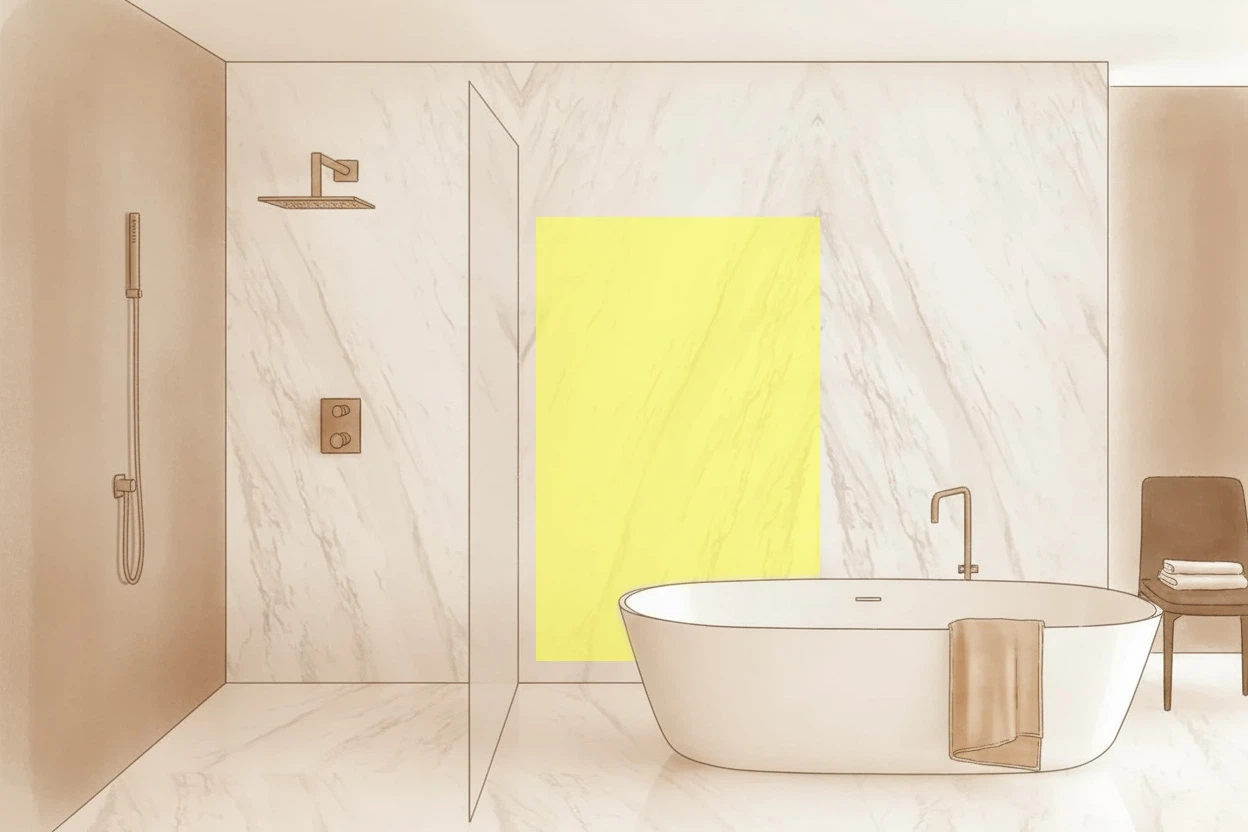
Large-format tile is the signature look of modern luxury bathrooms—clean lines, fewer grout joints, high-end aesthetics.
But it comes with a serious technical reality:
Large-format tile is far less forgiving than traditional tile.
When installed incorrectly, problems show up fast—hollow sounds, cracked corners, uneven edges, and loose tiles. In Miami’s humid climate, those problems only get worse.
The good news?
Almost every large-format tile failure comes down to a few preventable installation mistakes.
The most common cause is simple:
Insufficient mortar coverage.
For large-format tile, especially in bathrooms and wet areas, industry standards require 95–100% mortar coverage on floors and shower walls.
When coverage drops below that level, voids are created behind the tile. Those voids become weak points that lead to:
A beautiful tile can still fail if what’s behind it isn’t done correctly.
These are the exact mistakes we see repeatedly in Miami homes:
Using a trowel that’s too small leaves thin ridges instead of a full mortar bed.
Large tiles require mortar applied to both the substrate AND the back of the tile.
Spreading too much mortar at once causes it to skin over and lose bond strength.
If the wall or floor isn’t perfectly flat, the tile “bridges” high spots and leaves voids underneath.
Swirling mortar instead of directional combing traps air and reduces contact.
Any one of these shortcuts can turn an expensive installation into a future repair project.
Professional large format tile installation in Miami requires a methodical process:
Large and heavy tile needs specialized mortars designed for non-sag and high bond strength.
Especially for porcelain slabs and tiles larger than 12x24.
Straight, parallel ridges that collapse fully when the tile is pressed in.
Tiles are periodically lifted to verify real-world bond—not guessed.
Walls and floors must meet strict tolerances long before tile goes up.
This is skilled work—not a standard “set tile and grout” job.
Large tiles amplify every imperfection.
If a wall is even slightly out of plane, problems appear immediately:
Before we ever touch a tile, we focus on:
Without this step, even the best tile and mortar can’t perform correctly.
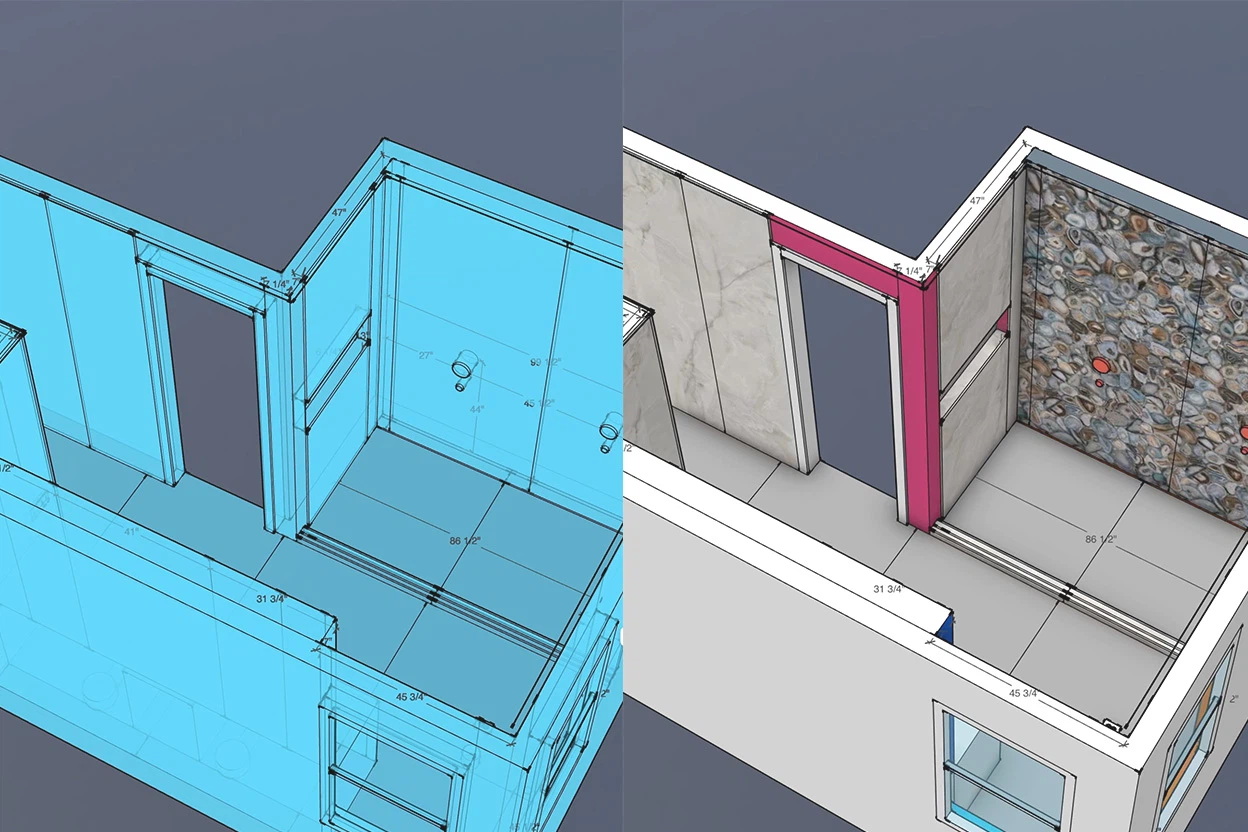
Most installers improvise layout decisions on the job site.
We don’t.
Before installation begins, we digitally plan every project in 3-D:
We map:
This eliminates on-site guesswork and ensures:
The installation is planned, not improvised.
That planning is the reason our large-format installations come out flat, clean, and long-lasting.
👉 Related Service: /services/large-format-tile
👉 Ready to start? /contact
South Florida adds extra challenges to large tile projects:
These factors increase the need for:
Large-format tile can perform beautifully in Miami—but only when installed correctly.
Big tiles don’t fail because they’re big.
They fail because the installation behind them wasn’t precise enough.
At Artiva Tile, precision is exactly what we deliver.
Q: What size tile is considered “large format”?
Any tile with one side longer than 15 inches (such as 12x24, 24x48, or porcelain slabs) is classified as large-format.
Q: Why do large tiles sound hollow after installation?
Hollow sounds usually mean there are voids behind the tile caused by low mortar coverage or uneven substrate.
Q: Is back-buttering really necessary?
Yes. For large-format tile, back-buttering is essential to achieve full mortar contact and long-term durability.
Q: Can large tiles be installed on bathroom walls safely?
Absolutely—when proper mortars, preparation, and coverage standards are followed.
Q: How flat do walls and floors need to be?
Large-format tile requires extremely tight flatness tolerances—often much stricter than for small tile.
Q: What is the biggest mistake homeowners make?
Choosing an installer based only on price instead of experience with large-format systems.
Q: Does Miami humidity affect large tiles?
Yes. Moisture and movement make correct installation methods even more important in South Florida.
Q: How do you verify mortar coverage?
Professional installers periodically lift tiles during installation to physically confirm coverage.
Don’t risk hollow tiles, cracks, or costly rework.
👉 Contact us for a precision-planned installation: /contact